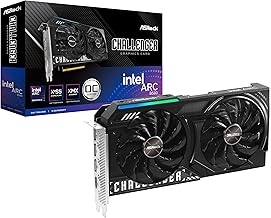
The graphics card market is more competitive than ever, and Intel's Arc series has carved out a significant niche with its compelling price-to-performance ratio. At the heart of this lineup is the B580 GPU, a powerful chip designed to deliver excellent 1440p gaming and content creation. With multiple board partners offering their own takes, choosing the right model can be daunting. This guide dives deep into the top contenders, comparing their features, cooling solutions, and overall value to help you make an informed decision for your next PC build.
The Core Contenders: ASRock vs. Sparkle vs. WEELIAO
Several manufacturers have released their own versions of the B580, each with unique design philosophies. The ASRock Intel Arc B580 Challenger 12GB OC is positioned as a robust, value-oriented option. It features a 2740 MHz GPU clock and a dual-fan cooling system that promises 0dB silent operation during light loads. This makes it an excellent choice for users who prioritize a quiet computing environment without sacrificing the 12GB GDDR6 frame buffer essential for modern games.
Stepping up in both aesthetics and cooling is the ASRock Intel Arc B580 Steel Legend 12GB OC. Boasting a slightly higher 2800 MHz clock speed, this model utilizes a triple-fan cooler for potentially better thermal headroom and overclocking potential. Its Polychrome SYNC RGB lighting integration appeals to builders looking to synchronize their system's aesthetics. For those seeking a premium alternative, the Sparkle Intel Arc B580 Titan OC brings its Torn Cooling 2.0 system with an axial fan design and a striking metal backplate, offering a different approach to dissipation and build quality.
Performance and Specs: What Does 12GB GDDR6 Offer?
The unifying strength across all B580 models is the generous 12GB of GDDR6 memory. In today's gaming landscape, where titles like Cyberpunk 2077 and Hogwarts Legacy can easily consume over 8GB of VRAM at 1440p, this capacity is a significant advantage. It future-proofs your system and allows for higher texture quality without stuttering. The memory interface, combined with support for modern standards like DisplayPort 2.1 and HDMI 2.1a, ensures compatibility with high-refresh-rate 4K monitors and variable refresh rate technologies.
When comparing clock speeds, the differences are marginal but noteworthy for enthusiasts. The Steel Legend's 2800 MHz gives it a slight edge in raw compute, while the Challenger and other models like the WEELIAO GUNNIR Intel Arc B580 Index offer strong performance at a potentially lower price point. For a comprehensive look at how these specs translate to real-world gaming, check out our in-depth B580 GPU review.
Cooling Solutions: From Silent Operation to Maximum Airflow
Effective cooling is critical for maintaining boost clocks and longevity. The dual fan cooling on the ASRock Challenger and WEELIAO Index models is efficient and often quieter, with the Challenger featuring a fan-stop technology for true silence during idle or light workloads. For users pushing their systems harder or living in warmer climates, the triple-fan setup on the Steel Legend or the advanced Torn Cooling 2.0 on the Sparkle Titan OC provides superior thermal dissipation.
Maintaining your GPU's cooling efficiency is also about upkeep. Over time, thermal paste can dry out. Using a high-quality compound like ARCTIC MX-4 thermal paste during maintenance can significantly lower temperatures. Furthermore, ensuring good case airflow is paramount. A set of reliable case fans, such as the DARKROCK 3-Pack 120mm fans, can dramatically improve overall system thermals by expelling hot air from the GPU more effectively. Our B580 cooling guide explores this synergy in detail.
Considering Alternatives: The B570 and A580
If your budget is tighter, the B580 isn't the only option in Intel's stable. The Sparkle Intel Arc B570 Guardian OC offers 10GB of GDDR6 and capable performance for 1080p and entry-level 1440p gaming. Similarly, the ASRock Intel Arc B570 Challenger provides a compelling package with its own 0dB cooling system. For even more budget-conscious builders, the 8GB Sparkle Intel Arc A580 ORC OC serves as a direct alternative, though with less VRAM. We've compared these in our A580 vs. B580 analysis.
It's also worth looking at the competition from AMD. The ASUS Dual Radeon RX 7600 EVO OC is a strong contender in the same price bracket, offering 8GB of GDDR6 and excellent 1080p performance with features like AMD's FidelityFX Super Resolution. The choice often comes down to specific game optimization, driver maturity, and whether you value the extra VRAM of the B580's 12GB VRAM for future-proofing.
Making Your Choice: Which B580 is Right for You?
Selecting the ideal B580 model depends on your priorities. For a balance of price, performance, and silence, the ASRock Challenger is a top pick. If you have a larger case, appreciate RGB, and want the highest factory overclock, the ASRock Steel Legend is worth the extra investment. Enthusiasts who admire unique cooling designs and premium build materials should consider the Sparkle Titan OC.
Ultimately, the Intel Arc B580 series represents a fantastic value proposition in the mid-range GPU market. Its combination of ample VRAM, modern display outputs, and competitive pricing from various board partners makes it a serious option for gamers and creators alike. Before you buy, ensure your power supply is adequate and that you have proper case ventilation to let any of these powerful gaming graphics cards shine. For a broader overview of the platform, our complete guide to the B580 covers all the essentials.